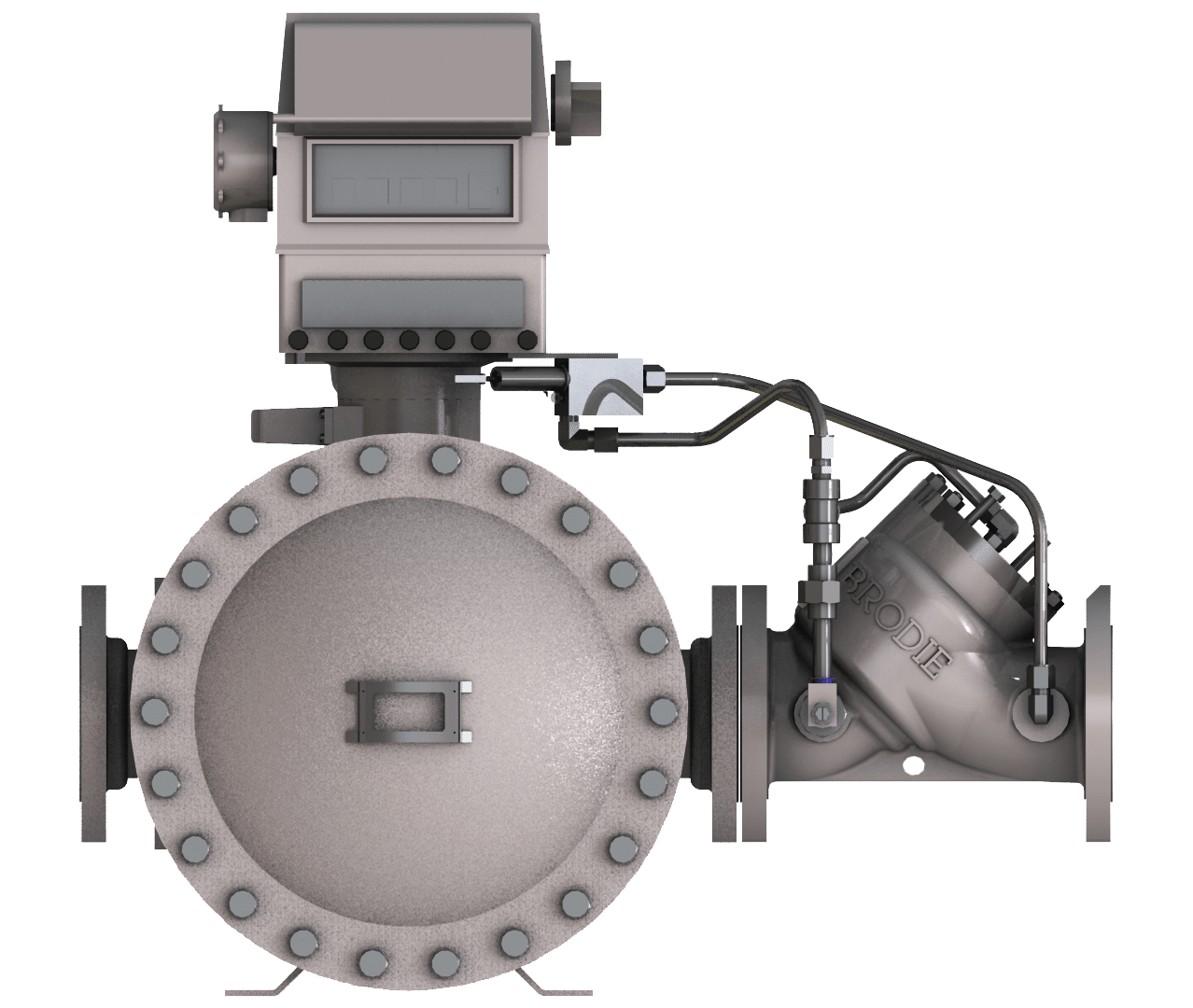
BV86 Two-Stage Mechanical Control Valve
The BV86 is a two-stage hydraulically actuated control valve designed to utilize the process flow stream as the source of power. It is commonly used with a positive displacement flowmeter equipped with a mechanical preset counter to provide shock-free two-stage closure. Using optional accessory pilots, mounted in series with the BV86 pilot, functions such as back pressure, pressure reducing, or rate of flow control can be obtained.
Technical Specifications
Technical Highlights
Total Control
Linear Operating Performance
Features
| Valve Size | 2″ | 3″ | 4″ | 6″ | ||
| Dimensions | 150 # | Inches | 10¼ | 11 | 13 | 17 |
| [flange to flange] | MM | 260 | 279 | 330 | 432 | |
| Dimensions | 300 # | Inches | 13⅛ | 14½ | 17⅞ | |
| [flange to flange] | MM | 333 | 368 | 454 | ||
| Capacity | CV-GPM | 71 | 187 | 237 | 590 | |
| Pressure | 150 # | SEP | SEP | SEP | CRN, PED | |
| Approvals | 300 # | PED | PED | PED |
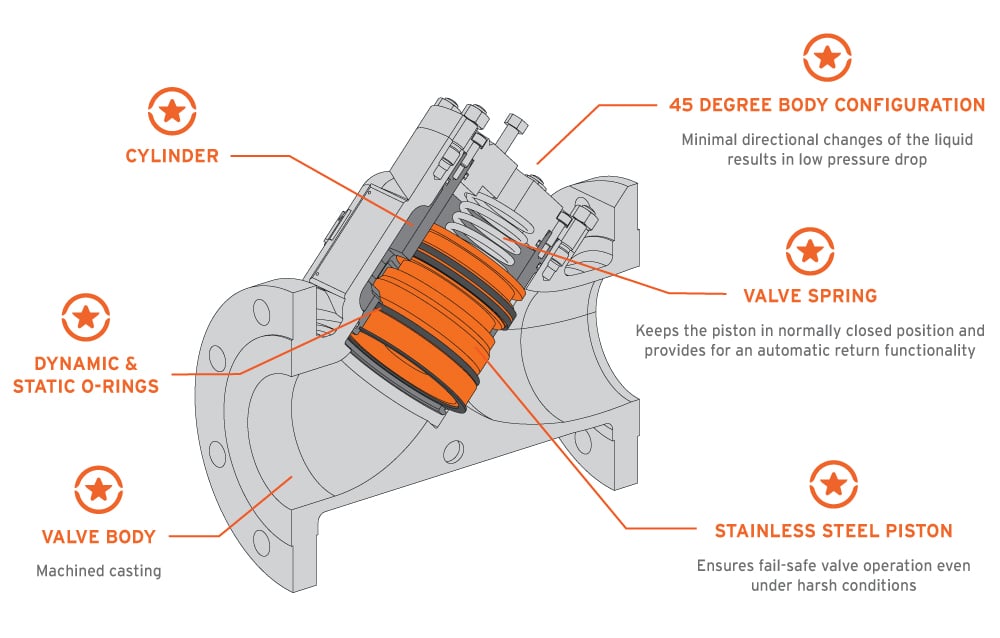
CHECK VALVE FUNCTIONALITY
The valve piston spring, biased to the closed position, has equal front and rear surface areas. This means that every Brodie Model BV valve has check valve functionality, with bubble-tight shut-off – no additional system check valve is required to prevent reverse flow. The valve will only open when upstream pressure is sufficient to overcome spring force.
BRODIE VS DIAPHRAGM VALVES
There are many advantages in using piston-operated control valves as opposed to diaphragm-operated valves, including:
- High flow capacity – lower pressure drop
- Optimum control at low flow gives better batching control
- Simple O-ring sealing – no special diaphragms
- Alternative O-rings easily obtainable per product specifications
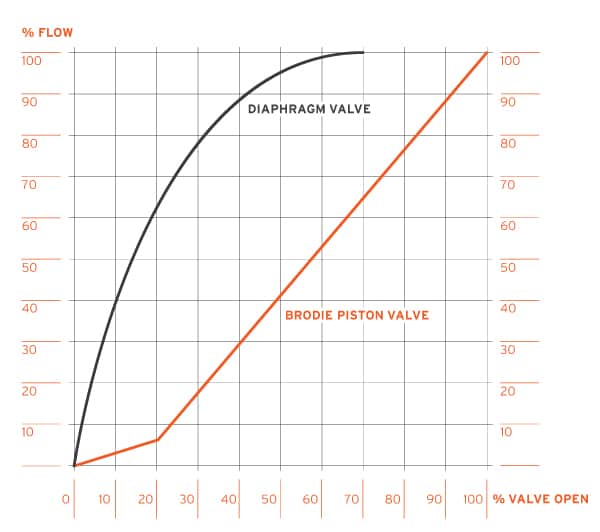
Designed to meet the challenges for today’s petroleum and environmental needs, Brodie’s positive sealing and linear action control valves provide uniform speed of response and leak-proof performance.
REDUCED COST OF OWNERSHIP
- Long service life, only one moving part
- Cylinder can be removed without removing body from the line
- Cylinder assemblies available as replacement kits
SECURITY & CONTROL
- Automatic shutoff for emergency protection
- Pressure monitoring at all times
UNIFORM SPEED OF RESPONSE
Flow modulation avoids delayed response and valve slam.
- Pilot operated
- Positive Sealing/Zero Leakage
- Modular construction/easy inline service
- Adjustable opening and closing speeds – prevents damaging shock pressure
- Linear action control for uniform fast speed of control
- Simple design without diaphragms
- Common valve body and internal mechanism simplifies spare parts inventory
- Multiple control functions can be performed with one valve